

2026 Chevrolet Blazer Ev in Issaquah WA
The 2026 Chevrolet Blazer EV is the right choice for active Pacific Northwest families who want a capable, long-range electric SUV without compromising on space or technology. Starting at $44,700 for the LT FWD and reaching $60,700 for the SS AWD, the lineup delivers up to 312 miles of EPA-estimated range, standard single-pedal driving, and a 17.7 in touchscreen across every trim. Five seats, about 25.5 cu ft of cargo, and available all-wheel drive make it a practical daily driver and weekend adventure vehicle.
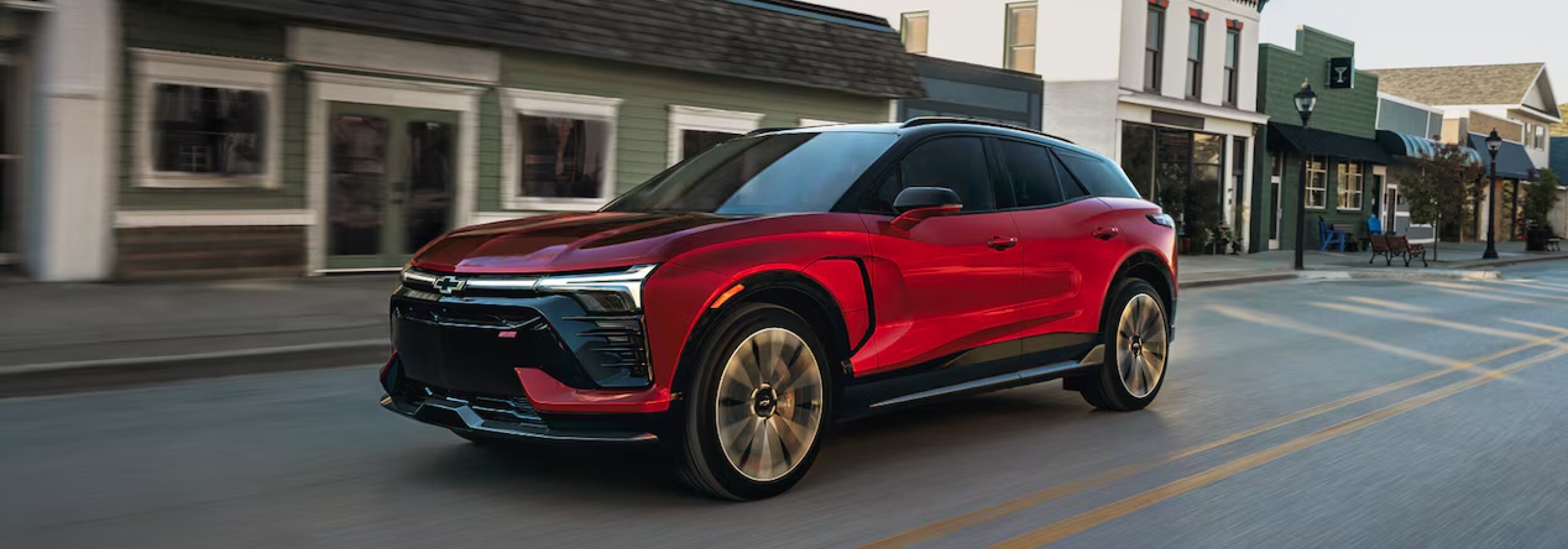
Table of Contents
- How Much Does the 2026 Chevrolet Blazer EV Cost in Issaquah and What Makes It Stand Out?
- Sleek Design That Matches an Urban-Nature Blend in the 2026 Chevrolet Blazer EV
- Power and Traction Built for the Forested Foothills: 2026 Chevrolet Blazer EV Performance
- Roomy Cabin Comfort for Family Trips in the 2026 Chevrolet Blazer EV
- Smart Tech That Keeps Commuters Connected and Efficient in the 2026 Chevrolet Blazer EV
- Confidence on Rainy Roads: Safety Features of the 2026 Chevrolet Blazer EV
- Breaking Down All 2026 Chevrolet Blazer EV Trims and Pricing for Washington Buyers
- Warranty, Maintenance, and Service Insights for 2026 Chevrolet Blazer EV Owners
- Awards and Expert Recognition Highlighting the 2026 Chevrolet Blazer EV's Strengths
- Frequently Asked Questions About the 2026 Chevrolet Blazer EV
How Much Does the 2026 Chevrolet Blazer EV Cost in Issaquah and What Makes It Stand Out?
The 2026 Chevrolet Blazer EV lineup spans six distinct configurations, starting at $44,700 for the LT FWD and topping out at $60,700 for the performance-oriented SS AWD — with every trim adding a $1,795 destination charge. That pricing range puts the Blazer EV squarely in reach for the local shoppers and families who make up the core of Issaquah's community, and it positions the vehicle competitively against other electric crossovers in its segment.
| Feature | LT AWD | LT FWD | Marked Police Package 9C1 Fleet AWD | RS AWD | RS FWD | SS AWD |
|---|---|---|---|---|---|---|
| Base MSRP | $47,700 | $44,700 | $55,100 | $53,500 | $50,500 | $60,700 |
The $3,000 spread between the LT FWD and LT AWD reflects the real-world value of all-wheel drive for drivers who regularly navigate the rolling foothills around Issaquah or the winding forest roads near North Bend. For those who primarily commute on flat suburban corridors, the LT FWD at $44,700 delivers the same 85 kWh battery, the same 17.7 in touchscreen, and the same standard safety suite — just with front-wheel drive and a higher EPA-estimated range of 312 miles versus 283 miles on the AWD variants.
Moving up to the RS AWD at $53,500 or the RS FWD at $50,500 adds sportier styling, a standard hands-free liftgate, wireless charging, a heated steering wheel, and ventilated front seats as standard equipment. The SS AWD at $60,700 steps up to 340 hp, sport-tuned suspension, and a higher-output powertrain calibration. The Marked Police Package 9C1 Fleet AWD at $55,100 is a purpose-built variant with a larger 102 kWh battery, 340 hp, and a 3,500 lb tow rating — a configuration relevant to fleet buyers rather than typical retail shoppers.
For buyers who want to explore the full range of available configurations, our current 2026 Blazer EV inventory at Evergreen Chevrolet shows exactly which trims are in stock and ready to drive home from 1601 18th Ave NW in Issaquah.
What makes the Blazer EV stand out at any price point is the combination of a large battery, a standard 11.5 kW onboard charger (capable of Level 2 charging in approximately 8 hours), DC fast-charging at up to 150 kW (reaching 10–80% in roughly 32 minutes), and a fully electric drivetrain that produces zero tailpipe emissions — a meaningful advantage for environmentally conscious buyers throughout the Puget Sound area.
Sleek Design That Matches an Urban-Nature Blend in the 2026 Chevrolet Blazer EV
Built on the BEV3 platform, the 2026 Blazer EV carries a silhouette that reads as modern and purposeful without veering into the polarizing styling territory that has tripped up some other EVs. At 192.2 inches long, 78 inches wide (86.5 inches including mirrors), and 65 inches tall, the proportions sit in the compact-to-midsize crossover sweet spot — wide enough to feel substantial on the road, low enough to slip into a standard parking garage.
The exterior design language uses a standard roof spoiler, black trim around the side windows, and painted front and rear bumpers that integrate cleanly with the body. LED headlights with projector beam lenses and LED daytime running lights are standard across the civilian trims, giving the front end a crisp, technology-forward look that suits the aesthetic of both Issaquah's outdoor-active community and Bellevue's more polished urban environment.
Color and trim choices allow buyers to personalize the Blazer EV's character. Options include Radiant Red Tintcoat (a metallic finish), a Summit White Two-Tone Roof, and a Black Two-Tone Roof — contrasting roof treatments that visually shorten the roofline and add a more athletic stance. The Midnight/Sport Edition option brings 19-inch wheels, black roof rails, and a blacked-out exterior treatment that appeals to buyers who want a more aggressive look.
Dealer packages extend the customization further. The Lifestyle Active Package swaps the standard chrome/silver roof rails for black rails with removable cross bars, adding front and rear mud flaps — a practical choice for anyone who regularly drives unpaved paths around Cougar Mountain Regional Wildland Park or Lake Sammamish State Park. The Tech Bronze Package upgrades the wheels from 19-inch alloys to 22-inch alloys, a visual change that significantly fills the wheel arches and adds a premium presence.
The RS trims receive a panoramic glass roof as a standard feature (not available on LT trims without the optional Sunroof add-on), along with black roof rails standard from the factory. The SS AWD wears its own distinct exterior treatment with sport-specific styling elements that set it apart from the LT and RS tiers. Across all trims, the liftgate is a traditional rear lift gate style, with a power-operated version available on RS and above.
Power and Traction Built for the Forested Foothills: 2026 Chevrolet Blazer EV Performance
The 2026 Blazer EV delivers its power through a single-speed automatic transmission — the mechanical simplicity inherent to all-electric drivetrains — meaning there are no gear shifts, no torque interruptions, and instant response from a standing start. That character matters on the kinds of roads that define driving in this region.
| Feature | LT AWD | LT FWD | Marked Police Package 9C1 Fleet AWD | RS AWD | RS FWD | SS AWD |
|---|---|---|---|---|---|---|
| Horsepower | 288 hp | 288 hp | 340 hp | 288 hp | 288 hp | 340 hp |
| Torque | 333 lb-ft | 333 lb-ft | 325 lb-ft | 333 lb-ft | 333 lb-ft | 325 lb-ft |
| Drivetrain | All-wheel drive | Front-wheel drive | All-wheel drive | All-wheel drive | Front-wheel drive | All-wheel drive |
The LT AWD, LT FWD, RS AWD, and RS FWD all share the same 288 hp and 333 lb-ft of torque output. That torque figure — available immediately from zero rpm — translates to confident merging on I-90, brisk acceleration through Issaquah's intersections, and the kind of hill-climbing authority that makes the winding approach roads around North Bend feel effortless.
The SS AWD and Marked Police Package 9C1 Fleet AWD step up to 340 hp, though interestingly their torque output is rated at 325 lb-ft — slightly lower than the standard trims. The SS AWD runs a sport-tuned suspension and is calibrated for a more performance-oriented driving character, while the fleet variant's power increase is focused on pursuit-rated capability.
All AWD variants use dual permanent magnet synchronous AC motors — one at each axle — providing full-time all-wheel drive without a traditional mechanical center differential. This setup delivers precise, electronically managed torque distribution that can shift power between the front and rear axles faster than any mechanical system. On wet Issaquah roads in November or on the damp forest tracks leading to Tiger Mountain, that capability is tangible rather than theoretical.
The FWD variants use a single front-mounted motor. Their advantage is efficiency: the LT FWD achieves 114 MPGe city / 95 MPGe highway / 104 MPGe combined and an EPA-estimated range of 312 miles, compared to the LT AWD's 102 / 86 / 94 MPGe and 283-mile range. For a daily commuter whose route stays on flat suburban roads, the FWD trims represent a meaningful efficiency gain.
The suspension architecture is consistent across the lineup: MacPherson struts with coil springs and a stabilizer bar up front, multi-link independent rear suspension with coil springs and a rear stabilizer bar, providing a balanced and comfortable ride. Four-wheel disc brakes (two ventilated front rotors) handle deceleration, supplemented by regenerative braking through the single-pedal driving system — which recovers kinetic energy back into the battery during deceleration, extending real-world range on hilly terrain.
Roomy Cabin Comfort for Family Trips in the 2026 Chevrolet Blazer EV
With 40.9 inches of front headroom and 44.2 inches of front legroom, the Blazer EV's front row has the dimensions of a full-size SUV cabin compressed into a crossover footprint. The rear bench delivers 38.1 inches of headroom and 38.9 inches of legroom — numbers that accommodate adult passengers on longer drives without the cramped-knee situation that plagues smaller crossovers. Shoulder room measures 58.7 inches front and 58.3 inches rear, and hip room comes in at 57.4 inches front and 53.8 inches rear.
| Feature | LT AWD | LT FWD | Marked Police Package 9C1 Fleet AWD | RS AWD | RS FWD | SS AWD |
|---|---|---|---|---|---|---|
| Cargo (seats up) | 25.5 cu ft | 25.5 cu ft | 25.5 cu ft | 25.5 cu ft | 25.5 cu ft | 25.8 cu ft |
| Curb weight | 5,163 lbs | 5,009 lbs | 5,870 lbs | 5,236 lbs | 5,084 lbs | 5,730 lbs |
| Towing | 1,500 lbs | 1,500 lbs | 3,500 lbs | 1,500 lbs | 1,500 lbs | — |
| Payload | 1,341 lbs | 1,274 lbs | 1,075 lbs | 1,268 lbs | 1,199 lbs | 1,104 lbs |
All civilian trims seat 5 and offer about 25.5 cu ft of cargo space with all seats in place, expanding to about 59 cu ft with the rear bench folded. The rear seats fold asymmetrically, allowing a combination of cargo and passenger configurations — useful when carrying both kids and gear for a Lake Sammamish outing. A flexible rear cargo cover is standard.
The LT trims come standard with cloth upholstery, with synthetic leather (Evotex) available through the Comfort and Convenience Package — which also adds heated and power-adjustable front seats with 5-way driver adjustment, heated steering wheel, chrome/silver roof rails, auto-dimming mirrors, and electrically folding side mirrors. The RS trims step up to standard synthetic suede/Evotex seating with ventilated front seats and memory-position driver's seat. The SS AWD adds its own sport-specific interior treatment.
Climate control is single-zone automatic on LT trims and dual-zone automatic on RS and SS trims — a meaningful upgrade for families where driver and passenger prefer different temperatures on longer drives. The electric heater operates independently of engine heat, meaning the cabin warms immediately regardless of outside temperature.
Storage throughout the cabin includes a full-length floor console, an overhead partial console, front and rear cupholders, and 3 front USB charging ports plus 2 rear USB charging ports. The front center armrest and rear center armrest are both standard. For families who regularly load the Blazer EV for weekend trips, the All-Weather Liner Package and All-Weather Mat Package add rubber/plastic floor coverings and mats that protect against the mud and moisture common after hikes around Cougar Mountain.
Smart Tech That Keeps Commuters Connected and Efficient in the 2026 Chevrolet Blazer EV
The centerpiece of the Blazer EV's tech stack is a 17.7-inch fixed-orientation center touchscreen paired with an 11-inch digital instrument cluster — both standard across all trims. The center display runs Google built-in, giving drivers direct access to Google Maps with EV intelligent route planning, Google Assistant voice commands, and app integration without needing a phone connection. Bluetooth connectivity, AM/FM/satellite radio, internet radio, and a 6-speaker audio system round out the standard audio setup.
Connectivity infrastructure is thorough. The Blazer EV includes an embedded SIM card that provides a 3 GB per month Wi-Fi hotspot (with the first month included), plus an OEM data plan. The standard Onstar Basics telematics package covers 96 months of remote services including remote lock/unlock, vehicle start, find-my-car, vehicle diagnostics, send-destination-to-car, and advanced auto collision notification — all accessible through the myChevrolet app. Remote battery management (battery status, remote charge activation, charge timer, and charge completion alerts) is included for an effectively unlimited subscription period.
Remote HVAC control — pre-cooling or pre-heating the cabin via phone — is standard and particularly valuable for buyers who park outdoors in Issaquah's summer heat or winter cold. The ability to arrive at a fully conditioned cabin without running the motor is one of those EV-specific conveniences that quickly becomes indispensable.
The Super Cruise Package is an available add-on for both LT and RS trims that unlocks Chevrolet's hands-free driver assistance technology. Super Cruise enables hands-free driving on compatible divided highways, integrating map-linked adaptive cruise control, stop-and-go function, automatic lane changing, traffic sign recognition, and a driver attention monitor. It operates as a Level 2 partial automation system, meaning the driver remains responsible for the vehicle but is not required to maintain physical contact with the steering wheel on supported roads. The package pairs with the Onstar One With Super Cruise Plan subscription option, which extends OnStar coverage to 96 months and adds highway assist and traffic jam assist.
Over-the-air software updates (OS-level) are supported, meaning the vehicle can receive feature improvements and calibration updates without a dealer visit — a practical advantage for tech-forward buyers who expect their devices to stay current.
The RS Convenience and Driver Confidence Package on RS trims adds a windscreen head-up display, heated rear seats, a digital rear-view mirror with integrated camera, and a windshield wiper de-icer — a combination that addresses both daily comfort and visibility in the rainy Pacific Northwest climate.
Fuel Economy
Fuel economy and range by trim
| Feature | LT AWD | LT FWD | Marked Police Package 9C1 Fleet AWD | RS AWD | RS FWD | SS AWD |
|---|---|---|---|---|---|---|
| MPG | 102 city / 86 hwy / 94 combined | 114 city / 95 hwy / 104 combined | 92 city / 77 hwy / 85 combined | 102 city / 86 hwy / 94 combined | 114 city / 95 hwy / 104 combined | 92 city / 77 hwy / 85 combined |
| EV range | 283 mi | 312 mi | 286 mi | 283 mi | 312 mi | 302 mi |
| Battery (kWh) | 85 | 85 | 102 | 85 | 85 | 102 |
Confidence on Rainy Roads: Safety Features of the 2026 Chevrolet Blazer EV
The 2026 Blazer EV carries a 5-star NHTSA overall safety rating, with 5 stars for frontal crash and side impact, and a 4-star rollover rating. IIHS testing shows Good ratings for moderate overlap front, small overlap front driver side, seat belt reminder, and LATCH child seat ease of use — alongside an Acceptable rating for headlights.
The standard safety architecture across all trims includes 8 airbags: dual front airbags, front side airbags, front and rear side curtain airbags, and driver and passenger knee airbags. Front seatbelts include pre-tensioners and height adjustability. All three rear seating positions have 3-point belts. LATCH child seat anchors are standard.
Active safety systems standard on all civilian trims include:
Forward Collision Alert monitors for potential frontal collisions, activates at speeds as low as 5 mph, and triggers both visual/acoustic warnings and automatic emergency braking. The system brakes at low speed in both forward and reverse directions, includes pedestrian and cyclist detection, and can activate seatbelt pre-tensioners and brake lights as part of its response sequence.
Lane Keep Assist with Lane Departure Warning monitors lane markings and applies steering correction when the vehicle drifts without a turn signal — a meaningful feature on the long, curved on-ramps and winding two-lane roads common in this region.
Rear Cross Traffic Alert (RCTA) uses radar to detect vehicles approaching from the sides when reversing — standard across all trims. The system includes braking intervention capability.
HD Surround Vision provides a 360-degree camera view (standard on LT and RS trims) that stitches together feeds from front, side, and rear cameras into a bird's-eye overhead perspective. Combined with Rear Park Assist (rear camera plus ultrasonic sensors plus guidance display), parking in tight urban spaces or backing a trailer becomes considerably less stressful.
Blind spot monitoring with collision avoidance capability is standard, operating without requiring a turn signal input. Electronic stability control, ABS with brake assist, hill holder, and electronic auto-hold for the parking brake are all standard equipment. The Pedestrian Audio Warning System — which emits a low-speed alert sound to notify pedestrians of the vehicle's presence — is standard as required for EVs operating below detection threshold speeds.
An emergency call function (automatic crash notification via OnStar) and an accident data recorder are also standard across the lineup.
Breaking Down All 2026 Chevrolet Blazer EV Trims and Pricing for Washington Buyers
The six trims in the 2026 Blazer EV lineup form a logical progression, and understanding where each sits helps buyers avoid paying for features they don't need — or missing upgrades they'd genuinely use.
LT FWD ($44,700) is the entry point and the most efficient choice. Front-wheel drive, 288 hp, 333 lb-ft torque, 312-mile range, 104 MPGe combined, and the full 17.7-inch touchscreen. Standard seating is cloth, with synthetic leather available via the Comfort and Convenience Package. Best suited for buyers whose driving is predominantly flat suburban and highway commuting.
LT AWD ($47,700) adds dual-motor all-wheel drive for $3,000. Range drops to 283 miles and efficiency to 94 MPGe combined, but the AWD system provides the traction confidence that Issaquah's rainy winters and occasional unpaved park access roads demand. The package lineup is identical to the LT FWD.
RS FWD ($50,500) steps up significantly in standard content: wireless charging, hands-free liftgate, heated and ventilated front seats with memory positioning, heated steering wheel, dual-zone climate control, a panoramic glass roof, and black roof rails — all standard. Interior upholstery moves to synthetic suede/Evotex. The RS Convenience and Driver Confidence Package adds a head-up display, heated rear seats, digital rear-view mirror, and wiper de-icer.
RS AWD ($53,500) brings all RS content plus dual-motor AWD, at the cost of 29 miles of range compared to the RS FWD (283 vs. 312 miles for the FWD variant).
SS AWD ($60,700) is the performance flagship for retail buyers: 340 hp, sport-tuned suspension, a more aggressive exterior, and a sport-specific interior. Towing capacity is not provided in the catalog data for this trim. Buyers who want maximum performance and are less focused on towing will find the SS compelling.
Marked Police Package 9C1 Fleet AWD ($55,100) is a purpose-built fleet variant with a larger 102 kWh battery, 340 hp, 286-mile range, and a class-leading 3,500 lb tow rating — more than double any retail trim's 1,500 lb rating. It also features a 19 kW onboard charger (vs. 11.5 kW on retail trims) and a 190 kW DC fast-charge capability. This configuration is designed for law enforcement fleet use and is not a typical retail purchase.
Buyers who also want to explore Chevrolet's truck-based electric lineup can view the new Silverado EV, which offers higher towing capacity for buyers with heavier hauling needs.
Warranty, Maintenance, and Service Insights for 2026 Chevrolet Blazer EV Owners
The 2026 Blazer EV comes with a comprehensive warranty package that covers the vehicle, powertrain, and battery separately — each with its own duration and mileage limit.
The bumper-to-bumper limited warranty covers 36 months or 36,000 miles, whichever comes first. The powertrain warranty extends to 60 months or 60,000 miles. The anti-corrosion warranty runs 72 months or 100,000 miles. Paint coverage is 36 months or 36,000 miles.
For EV-specific components, the warranty terms are more generous. The battery warranty covers 96 months (8 years) or 100,000 miles. The electric systems warranty mirrors this at 96 months or 100,000 miles. Roadside assistance is included for 60 months or 60,000 miles.
A full service warranty covers 24 months or 24,000 miles — effectively two years of scheduled maintenance coverage from the date of purchase.
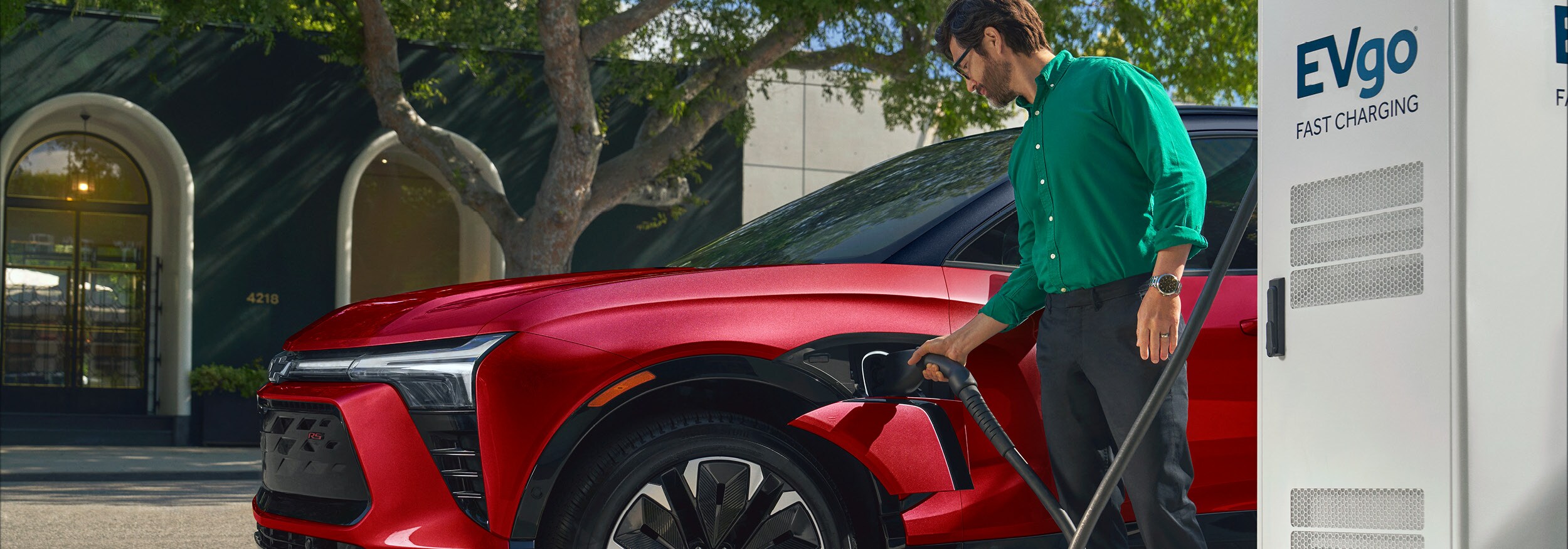
The onboard charging system supports three practical charging scenarios. On a standard 120V household outlet (Level 1), the Blazer EV charges at 1.4 kW, a slow top-up useful for overnight partial charging. On a 240V Level 2 charger (11.5 kW maximum on retail trims), a full 0–100% charge takes approximately 8 hours — well-suited to overnight home charging for buyers who install a home unit. The GM PowerUp Level 2 Charger and the Powershift Charger (which also supports vehicle-to-home charging) are available as dealer-installed options.
DC fast charging at 150 kW (on retail trims) brings the battery from 10–80% in approximately 32 minutes — a practical capability for longer road trips where a brief stop at a public DC fast charger can add substantial range.
The GM NACS DC Adapter and GM NACS Level 2 Adapter are available as dealer options, enabling compatibility with the growing North American Charging Standard network.
Over-the-air software updates mean many software-related improvements can be applied without a service appointment, reducing the total number of dealer visits required over the ownership period.
Awards and Expert Recognition Highlighting the 2026 Chevrolet Blazer EV's Strengths
The Blazer EV earned industry recognition early in its lifecycle that has helped establish its credibility in a crowded EV market. MotorTrend named the Chevrolet Blazer EV its 2024 SUV of the Year — a distinction that reflects the publication's assessment of performance, efficiency, value, safety, and advancement of automotive technology. For a first-generation electric crossover, that recognition represents a meaningful benchmark.
Ward's Auto recognized the Blazer EV as one of its 2024 10 Best Interiors & UX winners — an award that specifically evaluates the quality and usability of the cabin environment and human-machine interface. The 17.7-inch center touchscreen, the Google built-in integration, and the overall ergonomic layout of the cockpit were central to that assessment. For buyers who spend significant time in their vehicles — whether on a daily Bellevue commute or a weekend drive to the Cascades — interior quality and tech usability are not secondary concerns.
Car and Driver, Edmunds, and other automotive outlets have noted the Blazer EV's combination of driving range, fast-charging speed, and feature content at its price point as competitive advantages in the compact electric SUV segment. The vehicle competes directly with the Ford Mustang Mach-E, Hyundai Ioniq 5, and Tesla Model Y — a set of strong rivals that makes the MotorTrend SUV of the Year win more meaningful, not less.
The NHTSA's 5-star overall safety rating and the IIHS Good ratings for key crash tests add independent structural credibility to the safety claims. These are not manufacturer self-assessments — they are the results of standardized crash and safety evaluations conducted by third parties, and they matter to buyers who are making a decision about what vehicle will carry their family.
For buyers weighing the Blazer EV against its competitors, the combination of third-party awards, strong crash test results, and a well-rounded feature set across all trim levels makes the case clearly.
Frequently Asked Questions About the 2026 Chevrolet Blazer EV
Q: What is the real-world range of the 2026 Chevrolet Blazer EV, and which trim gets the most?
The LT FWD achieves the highest EPA-estimated range at 312 miles, followed by the RS FWD at the same 312-mile figure. AWD variants — LT AWD, RS AWD, and SS AWD — are rated at 283 miles. The Marked Police Package 9C1 Fleet AWD, which uses a larger 102 kWh battery, achieves 286 miles despite its higher power output. Range differences between FWD and AWD trims are consistent: front-wheel drive trades traction for approximately 29 additional miles per charge. For most daily commuters, either figure comfortably covers a week of typical driving between charges.
Q: How long does it take to charge the 2026 Blazer EV at home or at a public fast charger?
On a standard 120V Level 1 outlet, charging at 1.4 kW is very slow — plan on overnight charging for a partial top-up only. A dedicated 240V Level 2 home charger (11.5 kW on retail trims) takes approximately 8 hours for a full 0–100% charge, making overnight charging the practical standard. At a public DC fast charger, the Blazer EV accepts up to 150 kW (retail trims), bringing the battery from 10–80% in approximately 32 minutes. A GM NACS adapter is available as a dealer-installed option for compatibility with Tesla Supercharger-style networks.
Q: Does the 2026 Blazer EV have the ability to tow a small boat or trailer?
The LT AWD, LT FWD, RS AWD, and RS FWD trims are all rated at 1,500 lbs of braked trailer weight — sufficient for a small fishing boat, a light utility trailer, or a pair of kayaks on a trailer. The Marked Police Package 9C1 Fleet AWD significantly exceeds this at 3,500 lbs, but that trim is not a standard retail offering. A dealer-installed trailer hitch is available as an add-on option for retail trims. Towing capacity for the SS AWD is not provided in the catalog data.
Q: What is the difference between the LT and RS trims, and is the upgrade worth it?
The RS adds meaningful standard content over the LT: wireless charging, hands-free power liftgate, ventilated and heated front seats with memory positioning, heated steering wheel, dual-zone automatic climate control, a panoramic roof, and synthetic suede/Evotex upholstery. The RS FWD starts at $50,500 versus $44,700 for the LT FWD — a $5,800 gap. If heated/ventilated seats, wireless charging, and dual-zone climate are features you'd use regularly, the RS represents good value. If your priority is maximum range and lower cost of entry, the LT FWD is the more efficient choice.
Q: Where can I see a 2026 Blazer EV in person and get more information?
Evergreen Chevrolet is located at 1601 18th Ave NW, Issaquah, WA 98027. You can reach the sales team directly at (425) 427-0101 to confirm availability, ask about specific trim configurations, or schedule a test drive. The Blazer EV is best understood behind the wheel — particularly the immediate torque delivery and the single-pedal driving experience, which are characteristics that don't translate fully from a spec sheet.