

Preparing a 2026 Chevy for I-90 mountain pass driving requires testing 12V battery cold-cranking capacity, setting tire pressures according to door-placard specs, installing Three-Peak Mountain Snowflake (3PMSF) rated tires with at least 1/8-inch tread depth, filling windshield washer fluid with a sub-zero formula, and carrying matching tire chains. Verifying that drive modes like Snow/Ice mode or Auto AWD engage properly completes the baseline pre-pass inspection.
Driving Interstate 90 over Snoqualmie Pass presents extreme weather shifts within short distances. Temperatures at lower elevations often feel mild, but ascending toward the 3,000-foot summit brings heavy slush, freezing rain, and compact ice. Vehicles traveling this corridor demand proper ground clearance and winter-grade preparation. Models such as the Chevy Traverse and Tahoe offer over 7.5 inches of ground clearance, which helps clear deep snow ruts and slush ridges without packing snow into the engine bay or lower air dams.
A pre-winter check focuses on high-load mechanical systems. Sub-freezing weather reduces a vehicle's battery power while engine oil thickens, increasing the electrical draw required during ignition. Engine coolant concentrations must be tested to guarantee protection against both internal corrosion and freezing down to sub-zero temperatures. Inspecting brake pad thickness and checking rotor surfaces for salt-induced pitting ensures predictable stopping distances when traffic slows unexpectedly on mountain downgrades.
North Bend sits right at the base of the Cascades foothills where weather conditions shift rapidly before entering the mountain pass corridor. Preparing your vehicle before heading east on I-90 reduces the risk of mechanical issues during winter travel. To schedule a comprehensive vehicle inspection before winter storms arrive, stop by our Issaquah service center or give our team a quick call to set up an appointment.
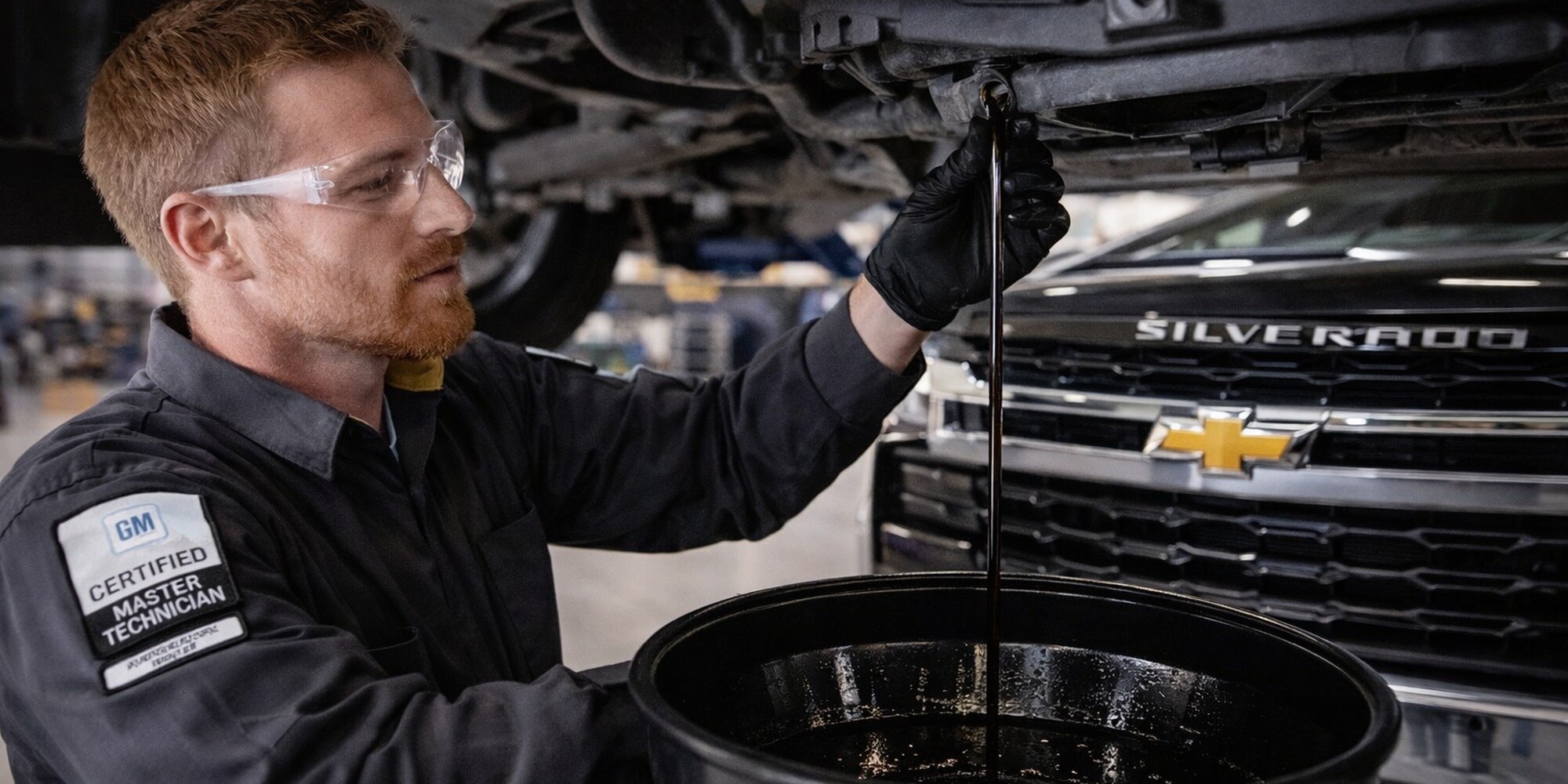
Table of Contents
- What Are Traction Tire and Chain Requirements for Snoqualmie Pass?
- How Do Chevrolet Auto AWD and 4WD High Systems Perform in Deep Snow?
- How Should Electrified 2026 Chevy EV Owners Prepare for Cold Mountain Passes?
- What Incremental Winter Maintenance Steps Should Be Scheduled for Your Chevy?
- What Essential Emergency Winter Kit Items Should You Pack in Your Chevy?
- Common Questions About Chevy Winter Prep and Pass Driving
- Schedule Your Chevy Winter Inspection
What Are Traction Tire and Chain Requirements for Snoqualmie Pass?
Washington State mandates that drivers carry tire chains over Snoqualmie Pass during posted winter conditions, even on all-wheel-drive vehicles. While all-wheel-drive Chevy SUVs under 10,000 pounds gross vehicle weight with approved 3PMSF or M+S traction tires on all four wheels are exempt from installing chains during standard restrictions, carrying matching chains in the vehicle remains legally required.
The Washington State Department of Transportation enforces graduated winter travel restrictions along I-90 based on real-time road surface conditions:
- Approved Traction Tires Required: Mandates tires with M+S or 3PMSF markings and at least 1/8-inch tread depth.
- Chains Required Except AWD/4WD: All two-wheel-drive vehicles must install chains. All-wheel-drive and four-wheel-drive passenger vehicles under 10,000 pounds do not need chains installed if approved traction tires are on all four wheels, but chains must be carried inside the cabin or cargo area.
- Chains Required On All Vehicles: Severe blizzards or sheet ice require every vehicle on the pass to install chains, with no exemptions for AWD or 4WD systems.
Tire markings determine legal compliance and real-world safety. The 3PMSF symbol features a snowflake inside a three-peak mountain outline, indicating the tire passed objective industry testing for acceleration and braking on packed snow. Standard M+S (Mud and Snow) tires meet basic tread void ratios but lack the cold-weather rubber compounds engineered for low-temperature flexibility.
Studded tires are legal in Washington state only from November 1 through March 31. State regulations clarify that studded tires do not count as tire chains when chain requirements are posted. Drivers exploring our inventory of new 2026 Chevrolet Blazer EV models or servicing existing all-wheel-drive crossovers can opt for all-weather tires with the 3PMSF rating to maintain pass compliance without needing seasonal tire swaps every spring.
How Do Chevrolet Auto AWD and 4WD High Systems Perform in Deep Snow?
Chevrolet Auto AWD uses wheel-speed sensors to operate in front-wheel drive until rear-wheel slip is detected, instantly engaging the rear axle, whereas 4WD High locks the front and rear driveshafts together in a continuous 50/50 torque split. For heavy slush, unplowed mountain pass lanes, and steep grades on Snoqualmie Pass, 4WD High or selecting Snow/Ice mode provides predictable traction without mechanical delay.
Understanding driveline behavior helps drivers maintain control in varying road conditions. Crossover SUVs like the Equinox and Traverse feature electronic Auto AWD systems that continuously monitor wheel speed, throttle position, and steering angle. When driving over slushy lane dividers, Auto AWD directs torque to the rear wheels within milliseconds to stabilize the vehicle. Full-size trucks and truck-based SUVs equipped with two-speed transfer cases feature true 4WD High, which mechanically couples the front and rear axles for constant power distribution across deep snow.
Electronic stability controls play a vital role during mountain travel. Chevrolet StabiliTrak technology compares driver steering input with actual vehicle motion, braking individual wheels and adjusting engine torque to correct understeer or oversteer slides. Models equipped with drive mode selectors include a dedicated Snow/Ice mode, which softens throttle responsiveness and adjusts transmission shift points to reduce wheel spin on slick surfaces.
When mountain commuters stop in for a pre-winter service visit, they usually ask whether Auto AWD is enough for I-90 slush before they ask about tread depth. While automated drive modes manage highway speeds smoothly, getting stuck in deep snow requires a different approach:
- Press the console button to temporarily disable StabiliTrak and traction control.
- Keep the front wheels pointed straight to minimize drag.
- Apply steady, gentle accelerator pressure to let the tires spin slowly and clear packed snow out of the tread sipes.
- Gently rock the vehicle between forward and reverse gears to build momentum out of ruts.
- Re-enable StabiliTrak immediately once the vehicle reaches cleared pavement.
How Should Electrified 2026 Chevy EV Owners Prepare for Cold Mountain Passes?
Electrified 2026 Chevrolet EV owners preparing for Snoqualmie Pass should maintain high-voltage battery state-of-charge between 20% and 80%, pre-condition the cabin and battery while plugged into Level 2 power before departing, and schedule routine underbody rinses to remove road salt. Cold temperatures increase battery internal resistance and cabin heating load, making thermal management and underbody protection essential for winter performance.
Low ambient temperatures slow electrochemical reactions inside high-voltage lithium-ion battery cells. Pre-conditioning through the vehicle settings or mobile app uses grid power to warm the high-voltage pack and passenger compartment to optimal operating temperature while still attached to a charger. Starting a trip over Snoqualmie Pass with a warm battery preserves stored pack energy for driving up mountain grades rather than diverting power toward initial thermal heating.
Underbody care protects structural components and electrical systems from chemical road treatments. Magnesium chloride and liquid de-icers sprayed on mountain highways adhere to aluminum battery enclosures, steel subframes, and high-voltage orange wiring conduits. Scheduling regular undercarriage pressure washes removes accumulated slush and salt deposits, preventing surface oxidation and preserving underbody shield hardware.
Brake maintenance requires specific attention on electric vehicles. Because regenerative braking performs a large portion of daily deceleration, traditional hydraulic brake calipers and rotors experience less friction heat and mechanical exercise. In wet, salty conditions, rotor surfaces can develop flash rust and caliper slider pins can bind. Periodic brake service cleans slider pins, lubricates pad contact points, and ensures full emergency stopping force remains available during steep pass descents.
What Incremental Winter Maintenance Steps Should Be Scheduled for Your Chevy?
A vehicle-specific winter prep schedule for crossing Snoqualmie Pass begins two to four weeks before mountain snow arrives with battery testing, tire tread measurements, and brake inspections, followed by fluid top-offs and wiper replacements one week prior. Staggering maintenance ensures critical driveline, electrical, and visibility components are verified before freezing conditions hit I-90.
Scheduling maintenance around seasonal weather shifts prevents last-minute delays before severe weather hits:
- 2 to 4 Weeks Before Snow Season: Test 12V battery cold-cranking performance and state-of-charge. Inspect brake pad thickness, rotor runout, and caliper seals. Measure tire tread depth and inspect sidewalls for cracking or uneven wear.
- 1 to 2 Weeks Before Snow Season: Flush brake fluid if moisture testing reveals contamination above 3%. Drain summer windshield washer fluid and refill reservoirs with sub-zero rated washer fluid. Replace streaking wiper blades with winter-beam style blades designed to resist ice buildup.
- At First Local Cold Snap: Re-check cold tire pressures using a digital pressure gauge. Tire pressure drops approximately 1 psi for every 10-degree drop in ambient temperature.
- Throughout Winter Driving: Wash the vehicle body and undercarriage regularly to prevent road salt buildup.
Issaquah commuters encounter mild lowland temperatures that contrast sharply with sub-freezing blizzards at the pass summit. Running dedicated winter tires continuously in mild lowland commutes speeds up tread wear on soft rubber compounds, making all-weather 3PMSF tires a popular year-round alternative for local drivers.
Vehicle servicing should also include checking transfer case fluid on four-wheel-drive trucks and differential fluid on all-wheel-drive crossovers. Replacing worn driveline lubricants ensures internal gears stay protected under high torque loads when hauling passengers and gear over steep mountain passes.
What Essential Emergency Winter Kit Items Should You Pack in Your Chevy?
An emergency winter kit packed in your Chevy for Snoqualmie Pass must include custom-fitted tire chains, a heavy-duty snow brush and ice scraper, jumper cables or a lithium jump pack, extra sub-zero windshield washer fluid, thermal blankets, high-visibility flashlights, and traction mats. Stowing these items securely in the rear cargo area ensures preparedness during unexpected pass closures or low-visibility whiteouts.
Mountain weather on Snoqualmie Pass can trigger sudden highway closures due to spun-out vehicles or avalanche control work. Carrying proper survival and recovery gear keeps vehicle occupants safe during extended delays:
| Emergency Kit Category | Essential Items | Primary Function |
|---|---|---|
| Traction & Recovery | Custom-fitted tire chains, traction mats, folding shovel | Clearing snow ruts and establishing tire grip |
| Visibility & Lighting | LED headlamp, extra batteries, heavy snow brush/scraper | Clearing glass and maintaining outdoor visibility |
| Vehicle Electrical | Heavy-gauge jumper cables or lithium jump starter | Resolving battery drain during cold waits |
| Safety & Warmth | Thermal Mylar blankets, fleece throw, waterproof gloves | Maintaining body heat if engine must be shut off |
| Fluids & Comfort | Sub-zero washer fluid, drinking water, non-perishable snacks | Sustaining driver visibility and passenger comfort |
Utility layouts across the Chevy crossover and SUV lineup provide dedicated storage spaces for emergency kits. The Traverse provides 23 cubic feet of rear cargo space behind the third row, while the Equinox features 30 cubic feet behind its second row, including hidden under-floor storage compartments perfect for keeping jumper cables and tow straps organized.
Coverage under the 5-year/60,000-mile powertrain warranty includes Chevrolet Roadside Assistance at 1-800-243-8872. This service provides towing, jump-starts, and emergency fuel delivery directly to authorized service facilities when severe weather causes unexpected breakdowns.
Common Questions About Chevy Winter Prep and Pass Driving
Q: Is a Chevy Equinox safe for driving over Snoqualmie Pass in winter weather?
Yes, when equipped with available all-wheel drive and 3PMSF rated tires, the Chevy Equinox offers a secure footprint over Snoqualmie Pass. Features like StabiliTrak electronic stability control, automatic emergency braking, and a standard 1.5L turbo engine provide responsive control on icy grades. Drivers should ensure tire tread depth exceeds 1/8 inch and carry fitted tire chains to remain fully compliant with state pass regulations.
Q: How do Michelin X-Ice winter tires compare to Bridgestone Blizzak on a Chevy Traverse?
On a Chevy Traverse, Michelin X-Ice Snow tires deliver exceptional longevity, lower rolling resistance, and composed handling on dry highway pavement, making them ideal for long-distance driving. Bridgestone Blizzak WS90 or DM-V2 tires utilize a multicell rubber compound that provides aggressive grip on sheer ice and deep slush. Both tires feature the 3PMSF symbol and fit factory Traverse wheel sizes, with selection coming down to mileage durability versus maximum ice traction.
Q: Does Chevrolet offer complimentary winter maintenance inspections?
Chevrolet service departments may perform a Multi-Point Vehicle Inspection during your maintenance visits. This inspection checks battery cold-cranking performance, brake pad thickness, fluid freeze points, tire tread depth, and wiper condition. Participating service departments also perform routine safety inspections during standard oil change service intervals to help owners identify winter prep needs before mountain driving.
Q: Can you run dedicated winter tires year-round in Western Washington?
Running dedicated winter tires year-round is not recommended because their soft silica rubber compounds degrade rapidly when ambient temperatures rise above 45 degrees Fahrenheit. Lowland highway driving in mild rain causes accelerated tread wear, compromised dry braking, and reduced fuel efficiency on winter tires. Drivers seeking year-round convenience with winter capability should select all-weather tires bearing the 3PMSF rating instead.
Q: What should you do if your Chevy gets stuck in deep slush on I-90?
If your Chevy becomes stuck in deep snow or slush on a pass pullout, temporarily disable traction control using the console button to allow the drive wheels to spin. Spin momentum helps clear packed snow from the tread sipes and rock the vehicle back and forth. Keep the front wheels straight, apply steady throttle, and re-enable StabiliTrak once the vehicle reaches moving pavement or clear lanes.
Schedule Your Chevy Winter Inspection
To keep your Chevrolet performing reliably through cold weather and heavy mountain snowfall, schedule a comprehensive winter inspection before heading over Snoqualmie Pass. Our factory-trained technicians will test battery cold-cranking performance, inspect brake pad and rotor wear, check cooling system freeze protection, verify tire tread depth, and confirm that all-wheel-drive components engage seamlessly.
Having factory-trained technicians inspect your vehicle ensures that system diagnostics, drive mode calibrations, and suspension hardware conform strictly to manufacturer specifications. Utilizing Genuine GM fluids, heavy-duty wiper blades, and factory-approved 3PMSF winter tire packages guarantees your vehicle remains prepared for unpredictable highway conditions across the Cascades.
Visit our dealership address today or reach out directly by giving our service team a call at (425) 427-0101 to reserve your pre-winter maintenance slot.
© 2026 Evergreen Chevrolet. All rights reserved.