

A full 2024 Chevrolet brake job includes replacing worn front or rear brake pads, replacing or resurfacing the brake rotors, inspecting the hydraulic calipers and lines, flushing fresh brake fluid, and testing hardware like wear sensors and anti-rattle clips. Technicians measure rotor thickness against factory discard specifications to ensure reliable stopping power under heavy loads.
During a standard service appointment, technicians remove each wheel to conduct a complete visual and dimensional evaluation of the braking assembly. On models like the 2024 Chevrolet Equinox, which features a 1.5L engine paired with front-wheel drive, pad friction material is measured with a digital caliper to check remaining life against factory thresholds. If the rotor face exhibits mild scoring but retains adequate thickness beyond the minimum cast limit, technicians use an on-car lathe to resurface the friction plane. If rotors fall below thickness limits or exhibit severe thermal warping, they are replaced with new units to prevent pedal pulsation during application.
Every full brake service includes inspecting rubber hydraulic hoses for swelling, cracking, or fluid seepage, alongside checking caliper slide pins for proper lubrication. Technicians clean caliper brackets, install new hardware clips to prevent pad chatter, and torque wheel lug nuts to exact factory specifications. For drivers navigating steep grades near the rolling foothills of Issaquah, maintaining peak thermal resistance across the entire friction system prevents fade during continuous downhill braking.
When minor wear concerns arise or routine checks show thin friction material, our service department at 1601 18th Ave NW provides thorough diagnostic reviews. You can reach our advisors at (425) 427-0101 to clarify specific interval recommendations for your model.
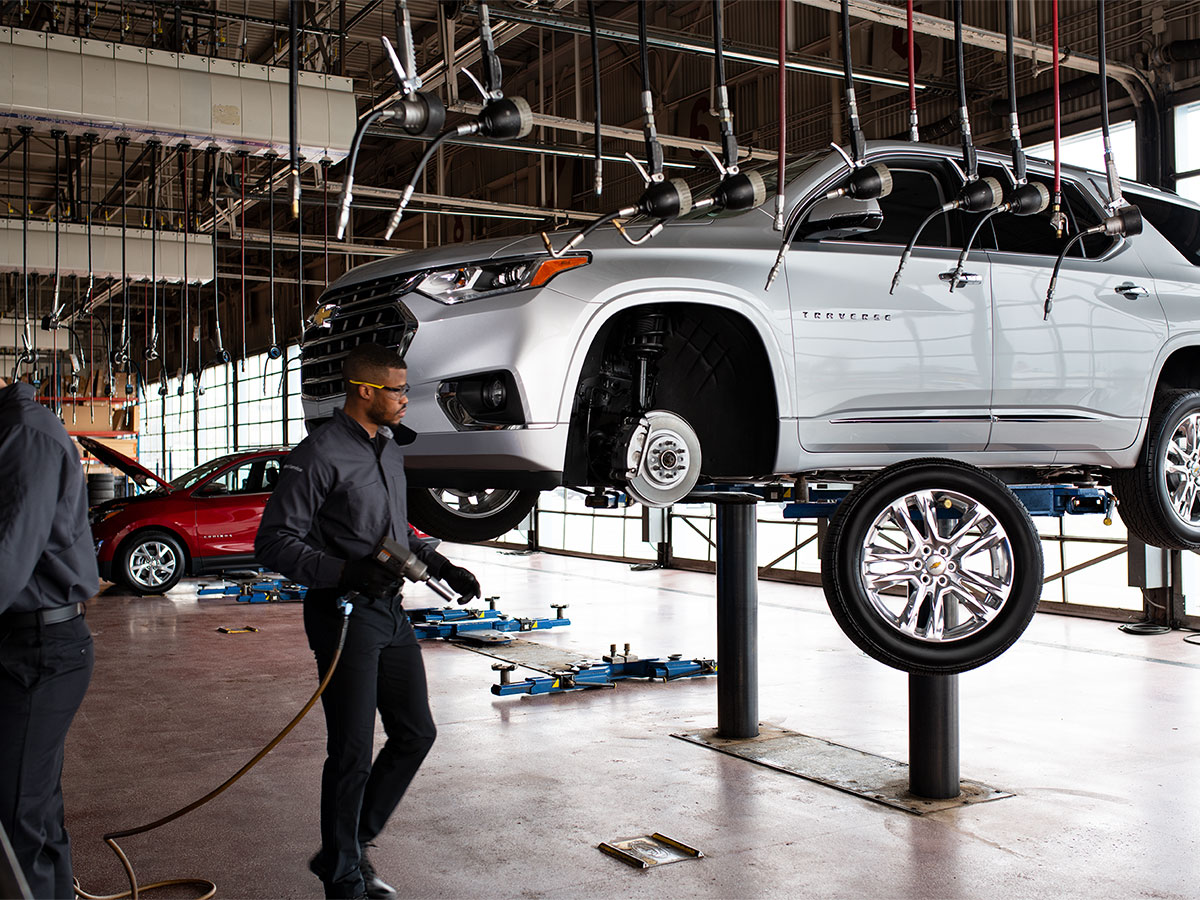
Table of Contents
- What Are the Primary Warning Signs of Worn or Failing Chevrolet Brakes?
- Why Does a Chevrolet Brake Pedal Feel Soft or Push Down to the Floor?
- Are Ceramic Brake Pads Factory Equipment on 2024 Chevrolet SUVs and Cars?
- How Often Should Chevrolet Brakes Be Inspected by a Technician?
- What Is the Average Cost to Replace Chevrolet Brake Pads and Rotors?
- Can Independent Repair Shops Service Chevrolet Brakes Without Voiding Warranty?
- Common Questions About Chevrolet Brake Maintenance and Repairs
- Scheduling Official Chevrolet Brake Service Near Issaquah
What Are the Primary Warning Signs of Worn or Failing Chevrolet Brakes?
The primary warning signs of worn or failing Chevrolet brakes include high-pitched squealing during light pressure, harsh metallic grinding while coming to a complete stop, steering wheel vibration during deceleration, a soft pedal, and illuminated dashboard brake warning lights. Hearing a high-pitched squeal means the mechanical wear indicator tab has contacted the spinning rotor face.
When friction lining wears down to approximately 2 millimeters, the built-in metal wear sensor pin contacts the rotor disc, creating an intentional high-frequency squeak. Ignoring this initial audible alert allows the friction pad to wear down to its steel backing plate. Metal-to-metal contact results in a harsh grinding sound that rapidly gouges deep grooves into the rotor surface, requiring complete rotor replacement rather than simple resurfacing.
Vibration felt through the steering wheel or brake pedal during deceleration indicates rotor lateral runout or uneven thickness variation caused by high thermal stress. Dashboard alerts, such as the red brake system warning lamp or yellow ABS light, signal low hydraulic fluid reservoir levels, electrical sensor faults, or pressure imbalances inside the master cylinder. Experiencing any noticeable increase in stopping distance or lateral pulling toward one side while stopping requires immediate professional evaluation to restore proper vehicle control.
Why Does a Chevrolet Brake Pedal Feel Soft or Push Down to the Floor?
A Chevrolet brake pedal feels soft or sinks to the floor when air enters the hydraulic fluid lines, brake fluid leaks out, or the master cylinder internal seals deteriorate and fail to hold hydraulic pressure. Air bubbles compress under foot pressure instead of transferring mechanical force directly to the brake calipers.
Hydraulic brake fluid is hygroscopic, meaning it naturally absorbs ambient moisture over prolonged operation. Moisture accumulation lowers the boiling point of the fluid. Under heavy braking conditions, localized heat can boil the contaminated fluid, creating compressible vapor pockets inside the brake lines that cause the pedal to feel spongy. Hydraulic leaks along flexible rubber lines, caliper piston seals, or wheel cylinders also allow fluid to escape, causing pedal height to drop toward the floorboard under steady pressure.
Internal master cylinder failure occurs when primary or secondary rubber cup seals wear out, allowing fluid to bypass the piston inside the cylinder bore rather than pushing outward to the wheels. When drivers ask our technicians about a pedal that slowly sinks while holding pressure at a stoplight, we perform a pressure-leak test across the hydraulic circuits to isolate internal master cylinder bypass from external line leaks.
Are Ceramic Brake Pads Factory Equipment on 2024 Chevrolet SUVs and Cars?
Yes, ceramic brake pads come standard as factory equipment on most 2024 Chevrolet crossover SUVs and passenger cars, including popular models like the 2024 Chevrolet Equinox and 2024 Chevrolet Traverse. Ceramic friction formulas deliver quiet operation, smooth initial bite, and low wheel dust for everyday suburban driving.
Ceramic compounds consist of dense ceramic fibers, nonferrous filler materials, and bonding agents engineered to withstand repetitive heat cycles without generating dark brake dust on alloy wheels. On the 2024 Chevrolet Traverse, which pairs an automatic 8-speed transmission with a 2.5L engine and all-wheel drive, ceramic pads offer predictable stopping power across varied wet and dry road conditions while keeping cabin noise levels low.
Heavy-duty trucks like the 2024 Chevrolet Silverado 1500 typically rely on semi-metallic friction pads from the factory. Semi-metallic pads utilize steel, iron, and copper fibers embedded in resin, providing higher thermal heat dissipation and stronger fade resistance under heavy payload hauling or trailering conditions. Choosing between ceramic and semi-metallic replacement friction options depends on vehicle weight rating, towing demands, and individual driver preference for noise reduction versus maximum heat tolerance.
How Often Should Chevrolet Brakes Be Inspected by a Technician?
Refer to your owner's manual or service schedule for recommended brake inspection intervals, which aligns directly with standard oil change and tire rotation schedules. Vehicles used for frequent towing, heavy payload hauling, or mountain commuting require accelerated checks every 10,000 to 12,000 miles under severe-service guidelines.
During a routine maintenance inspection, technicians measure pad lining thickness across both inner and outer pads on every wheel. Front pads generally wear faster than rear pads due to forward weight transfer during stopping. A typical brake pad lasts between 30,000 and 70,000 miles depending on driving habits, cargo load, and regional driving topography. Drivers making frequent daily commutes into Bellevue experience regular stop-and-go traffic that increases pad surface wear compared to steady highway cruising.
Hydraulic brake fluid maintenance follows a separate calendar timeline. Chevrolet guidelines specify exchanging DOT 3 or DOT 4 hydraulic brake fluid every two to three years, or roughly 45,000 miles. Because fluid absorbs atmospheric humidity over time, routine flushing removes trapped moisture, prevents internal ABS module corrosion, and preserves hydraulic pressure efficiency.
What Is the Average Cost to Replace Chevrolet Brake Pads and Rotors?
Replacing brake pads on a Chevrolet typically averages between $150 and $300 per axle for parts and labor, while a complete job replacing both pads and rotors ranges between $375 and $750 per axle. Full-size trucks like the 2024 Chevrolet Silverado 1500 or large three-row SUVs land on the higher end of that range due to larger heavy-duty rotor castings and larger friction surfaces.
Overall service pricing varies based on several specific factors:
- Vehicle class and weight: Heavy-duty trucks require larger rotor diameters, thicker friction pads, and specialized caliper hardware compared to compact crossovers.
- Component materials: ACDelco GM Original Equipment ceramic pads cost more than aftermarket organic pads but maintain original factory noise and wear standards.
- Rotor condition: Replacing damaged rotors increases total component costs, whereas machining reusable rotors lowers overall repair expenses.
- Hydraulic service needs: Adding a brake fluid flush or replacing worn caliper slide hardware adds labor time and fresh fluid consumables to the repair order.
Front brake service costs slightly more than rear brake service because front assemblies handle approximately 70 percent of braking force, requiring larger, heavier components. Utilizing premium replacement hardware with baked-on anti-corrosion coating prevents rust buildup along rotor hats and cooling vanes, extending service life in damp environments.
Can Independent Repair Shops Service Chevrolet Brakes Without Voiding Warranty?
Independent auto repair shops can perform routine maintenance and brake pad replacements on a Chevrolet without voiding the factory bumper-to-bumper or powertrain warranties under federal consumer protection laws. However, warranty claims for defective factory brake components or specific OEM part replacements must be performed at an authorized service center.
Under federal law, vehicle manufacturers cannot invalidate a car warranty simply because routine maintenance was performed outside the dealership network. Owners must retain itemized service invoices showing date, mileage, and specific parts used to prove proper maintenance compliance. If a non-dealer repair shop installs non-compliant aftermarket parts or causes damage during service, repairs related to that specific failure are not covered under the original manufacturer warranty.
Authorized service departments utilize ACDelco parts engineered to exact General Motors specifications. ACDelco GM Original Equipment brake pads feature a 24-month/unlimited-mile limited warranty, while select ACDelco Gold brake components include a limited lifetime warranty. Booking routine care through our online maintenance scheduler ensures that factory service campaigns, service updates, and original component warranties remain fully documented under your vehicle's identification number.
Common Questions About Chevrolet Brake Maintenance and Repairs
Q: Does Chevrolet offer a warranty on ACDelco replacement brake pads?
Yes, Chevrolet offers warranty coverage on replacement brake components purchased through authorized service channels. ACDelco GM Original Equipment replacement brake pads come with a 24-month/unlimited-mile limited warranty against material or workmanship defects. Additionally, select ACDelco Gold friction pads carry a limited lifetime warranty for parts-only replacement, providing long-term value for ownership upkeep.
Q: What is the difference between resurfacing brake rotors and replacing them?
Resurfacing, also called turning rotors, involves using a precision lathe to remove a thin layer of metal from the rotor surface, smoothing out minor scoring and restoring a flat friction plane. Replacing rotors involves installing entirely new cast-iron rotor units. Resurfacing is only possible if the rotor retains adequate thickness above the minimum cast discard limit stamped on the rotor hat.
Q: Why does my vehicle squeak when braking only in reverse or on cold mornings?
Morning squeal often results from thin surface oxidation or moisture accumulation forming on the rotor face overnight in damp air. Light morning condensation burns off after the first few stops. Squeaking specifically in reverse occurs as friction pads shift slightly within caliper brackets against reversed rotational torque, which can be mitigated by installing new caliper hardware clips and damper grease.
Q: How long does a standard Chevrolet brake replacement appointment take?
A standard single-axle brake pad and rotor replacement typically takes between one and two hours to complete. A full four-wheel brake replacement combined with a hydraulic fluid flush usually requires two to three hours of shop service time, allowing technicians time for thorough inspection, precision machining, bleeding, and final road testing.
Q: What type of brake fluid does my Chevrolet require?
Most modern Chevrolet vehicles require DOT 3 or DOT 4 hydraulic brake fluid as specified in the owner's manual and stamped on the master cylinder reservoir cap. Utilizing the correct fluid specification ensures proper boiling points and seals compatibility across the internal anti-lock braking system.
Scheduling Official Chevrolet Brake Service Near Issaquah
Maintaining responsive stopping performance, clean hydraulic lines, and healthy friction pads protects your vehicle through every daily commute and weekend excursion. Routine checks performed at 7,500-mile intervals catch thin pad friction material and rotor wear early, preventing unnecessary damage to expensive calipers or wheel hubs. Certified technicians bring model-specific expertise, specialized diagnostic equipment, and genuine factory parts to every maintenance procedure.
Our service department provides complete care options ranging from routine pad thickness measurements to hydraulic system flushes and rotor replacements. To arrange an inspection or discuss your vehicle's upcoming maintenance schedule, contact our service team directly. When bringing your vehicle in for care, find our service center location right off 18th Ave NW for efficient, reliable maintenance.
© 2026 Evergreen Chevrolet. All rights reserved.